Where's the book?

Thursday, March 20, 2014

A new author!

Don't you love it when you discover a new author that you think you could have a long and fruitful relationship with? It happened to me, having just finished Life After Life by Kate Atkinson (#12).

I had never even heard of Atkinson, until this book came out last year and got glowing reviews all over the place, which I thankfully read. The concept sounded interesting, or perhaps irritating: the main character, Ursula Todd, is born in 1910 to a middle-class British family. Sounds straightforward, no? Not at all. The book moves forward in time, then re-starts, over and over, imagining alternative lives -- and deaths -- for Ursula. In one, she strangles on the umbilical cord, and never survives her own birth. In others, she is killed by falls, diseases, war, and other grisly methods. In one, she even meets Hitler.

Although I feared it would be an off-putting gimmick, the technique works, and the story is deeply engrossing. Atkinson has an incredible eye for detail, and I don't think I've ever read a book that so clearly conveys what it would have been like to live in London through the Blitz. Ursula's lives are occasionally extraordinary, but mostly quite ordinary, and somehow the author manages to weave them together in a way that feels completely satisfying, plausible, and deeply moving.

So now I get to read other works by Atkinson, including her Jackson Brodie detective series. Yeah!


Wednesday, March 19, 2014

The fabulous famille Glass: #11

Way back in high school (way, way back), I read everything J.D. Salinger wrote. He was one of the literary heroes of my youth, one of the writers that every adolescent who wanted to be considered literate, or arty, or cool, read, along with Herman Hesse and Kurt Vonnegut. They were the triumverate, the ones we read and talked about and re-read and idolized. Then there were the lesser writers (lesser in the sense that they weren't mandated reading, more on the recommended list): Ken Kesey, Jack Kerouac, John Barth, Joseph Heller, Robert Heinlein... And for some of us, there were our particular extra-cool favorites, like Fitzgerald and Capote (two of mine). There was tremendous flexibility here, some of the smart lit-kids read Pynchon (the really smart lit-kids), some read Philip K. Dick, some read Dunleavy.

But everyone (everyone who wanted to be a writer or an artist, which was an awful lot of us in the late sixties/early seventies) read Salinger. He spoke to us. He spoke for us.

It's been an awful long lot of years since I picked up a book by J.D. Salinger, and I was worried that time had not done right by one of my youthful heroes. Would the angst wear well? Would all that caviling about phonies and authenticity seem dated? Worse, would it feel silly?

I am so happy to report that Franny and Zooey (a short story and a novella, first publisher in the New Yorker in 1955 and 1957) wear as well as a Mary Quant mini, maybe better. The two youngest members of the uber-smart, articulate, precocious Glass family, Franny and her older brother Zooey are the best of literary company. In her story, Franny is on a weekend date with her college boyfriend, and falling apart internally as she suffers through his self-aggrandizing stories of his collegiate success. In his story, which is set soon after Franny's ends, and narrated by their absent older brother Buddy (my teenage hero), Zooey is dealing with his mother and sister, the one distraught over the existential and emotional breakdown of the other.

Much of the writing is in dialog, and Salinger expresses so much character through the way each member of the Glass family speaks, and how they relate to each other. I was very afraid that all the stuff about inauthenticity, and phonies, and the religious discussions would seem juvenile. But it didn't, it felt real and rich and I was so happy to realize that I loved being in the company of the fascinating family Glass -- so happy, in fact, that I went out and bought 9 Stories and Raise High the Roof Beam, Carpenters and Seymour, an Introduction. So there is more Glass-erie coming our way.


Friday, March 7, 2014

Catch up

Been away for a couple of weeks and been reading, but not reporting. Need a quick catching up session, so here it is.

#6 Uncle Tom's Cabin by Harriet Beecher Stowe. Abraham Lincoln, on meeting Mrs. Stowe, is supposed to have said, "So you're the little lady who started this great war." You can certainly see why the pen is mightier than the sword. I wanted to fight the Civil War all over again after reading this book. I set out to read it for the sake of filling in the gaps in my knowledge. I mean, we've all heard of Little Eva and Eliza and Topsy and Uncle Tom. But I wanted to know how and why they got to be so much a part of our collective consciousness. And now I do. The book was as preachy as I expected it to be, and far more compelling a read. I cried more than once, chuckled occasionally, and was completely captivated by the story. 12 Years a Slave, eat your heart out. I can see why that book was thoroughly eclipsed by this one.

#7 The Sheltering Sky by Paul Bowles. Read it for my book group and loved it. So bleak! So despairing! So dark! It reminded me, in its blisteringly desolate view of humanity and its place in the godless universe, of The Stranger, another favorite. I just have a soft spot for those absurdist, existentialist writers, I guess. They make for such compelling reading. The story of a young married couple, Port and Kit, who take a misbegotten trip to the North African desert, the book takes a strange turn about midway through, when Port dies and Kit goes off into an acid-trip-like journey through the desert and into a strange sexual landscape. It's all weird, and all wonderfully written.

#8 Little Failure by Gary Schteyngart. His memoir. Born Igor in St. Petersburg when it was still Leningrad, he came to the US at age 7, lived in Queens with his mismatched, unhappy, and overly attentive parents, attended Yeshiva, then Oberlin. It's wonderfully funny, and caustic, and loving.

#9 Straight Man by Richard Russo. Although I usually love Richard Russo's books, I can't say I liked this one much. So I won't. In the first sentence, the narrator, an English professor at a small college in Pennsylvania, tells us that he was an exasperating child and is an exasperating man. I would add that he is an exasperating narrator. His jokey, take-nothing-seriously (including his marriage, career, and children) tone, got on my nerves. Not my favorite by him.

#10 The Reef by Edith Wharton. This was, way back when, the first Edith Wharton book I ever read, and I remember loving it so much that I went on to read everything Mrs. Wharton ever wrote. But I had since completely forgotten what this book was about, except that it had something to do with a governess. So it was time for a re-reading. Unfortunately, the passage of years had not treated this book well, at least in the eyes of this reader. Considered her most "Jamesian" work, it reminded me of everything I don't like about the later works of Mr. James. The characters are overly opaque, the writing is oblique and veiled, and I found myself uninterested and uninvolved. I'll stick to other Wharton for future re-reads.

I've read ten books and it's week 10. 2014: So far so good!


Friday, January 24, 2014

The year is off to a fast start

Gonna do it this year. Gonna read a book a week. Almost made it last year, fell short by two. But this year, yes. Which is why I'm writing shorter sentences without verbs and adjectives. Leaves more time for reading. Let's cut to the chase.

Book #1: The Quiet American by Graham Greene
I wanted to read a book set in Vietnam, since I'm going there in a few weeks. It's mighty hard to find anything other than war novels. And this one, set in the 1950s during the Indochina War. The narrator is a British journalist covering the war, in love with a young local woman. It's a bleak novel, no surprise, given the author, but interesting. I doubt it was very illuminating as to the Vietnam I will encounter in 2014, but it was a worthwhile read.


Book #2: Someone by Alice McDermott
A lyrical, poetic novel of one ordinary woman's life. I had never read anything by McDermott but will definitely seek out more. The story skips about in time, but weaves a beautiful fabric. There is a constant sense of the often unnoticed poetry of life, but also a persistent sense of life's dangers, that feeling of horror being just around the next corner. Chosen by my book group as our January read, and I was pleased to discover a new author I thoroughly enjoyed.


Book #3: Fun Home by Alison Bechdel
I saw the musical at the public and was moved to read my first graphic novel, although this one is not really a novel, it's a graphic memoir, which unfortunately sounds like porn.  It's her story of her family and childhood, the family business, a funeral home, nicknamed the "Fun Home," gives the book its title. Which makes sense, because this was not, in the normal meaning, a fun home. Alison's dour, depressed father was a high school English teacher and closeted homosexual, having secret encounters with other men, some of them underage. Her unhappy mother found an outlet in local community theater. And Alison herself came out as a lesbian in college. Her letter home announcing her lesbianism was greeted with her father's surprise coming out as gay, followed just a few months later by his suicide. The stage version, with three women starring as Alison at three different stages in her life, was amazing. And the book was equally moving and engrossing.


Book #4: The Boy Who Went Away, by Eli Gottlieb
A small, slight, disturbed and disturbing story about a very broken family, this novel felt so real, so upsetting, that it was often hard to read, yet at the same time hard to put down. It's 1967, the Vietnam War is raging in his living room, and the narrator, Denny, is spying on all his neighbors and the other members of his family. There are plenty of rocks to turn over, and many worms crawling out. Some are clear, some are shady, because we see everything through Denny's often confused eyes. At the heart of the story is Denny's autistic older brother Fad, who may become, despite his mother's heroic efforts, the boy who went away. But even before he physically departs, Fad,   the most important person in the family, is also, because of his condition, somewhere very far away.

Book #5: The Execution of Noa P. Singleton, by Elizabeth Silver
Another book hopping on the Gone Girl train, this one wishes it could hold your interest and surprise you like Girl. It's the story of a woman who is on death row, her last minute appeals, and the flashbacks to her crime and the tough life that led up to it. I wasn't surprised, it wasn't a page-turner, and in the end, I didn't care.


Saturday, January 4, 2014

2013: What I Read (and what I really liked)


Herewith, a list of all books read in 2013. Roughly in order (I might have switched a couple around), with an asterisk if they deserve special note.

  1. The Grapes of Wrath by John Steinbeck * (with a !)
  2. Birds Without Wings by Louis de Bernieres
  3. The Vanishers by Heidi Julavits
  4. By Blood by Ellen Ullman
  5. The House Gun by Nadine Gordimer
  6. The Slap by Christos Tsiolkas
  7. The Puppet Masters by Robert Heinlein
  8. Sweet Tooth by Ian McEwan *
  9. The Suicide Index by Joan Wickersham *
  10. Jane Eyre by Charlotte Bronte * (of course)
  11. No Mark Upon Her by Deborah Crombie
  12. The Gods of Gotham by Lindsay Faye
  13. Kim by Rudyard Kipling
  14. Where Memories Lie by Deborah Crombie
  15. The Orientalist by Tom Reiss
  16. Ali and Nino by Kurban Said
  17. Olive Kitteridge by Elizabeth Strout *
  18. Carry the One by Carol Anshaw
  19. This is How You Lose Her by Junot Diaz *
  20. Tiny Beautiful Things by Cheryl Strayer
  21. The Host by Stephanie Meyer
  22. What Matters in Jane Austen by John Mullan
  23. Harvard Square by Andre Aciman *
  24. Where’d You Go, Bernadette? By Maria Semple
  25. The Interestings by Meg Wolitzer *
  26. The Burgess Boys by Elizabeth Strout
  27. Billy Lynn’s Long Halftime Walk by Ben Fountain *
  28. Super Sad True Love Story by Gary Shteyngart
  29. Let the Great World Spin by Colum McCann *
  30. The Cockoo’s Calling by Robert Galbraith (JK Rowling)
  31. Mrs. Miniver by Jan Struther
  32. Frankenstein by Mary Wollestonecraft Shelley
  33. Northanger Abbey by Jane Austen *
  34. Mansfield Park by Jane Austen *
  35. Prep by Curtis Sittenfeld
  36. Summer Reading by Hilma Wolitzer
  37. Skylark by Dezso Kosztolanyi
  38. The Yonahlossee Riding Camp for Girls by Anton DiSclafani
  39. The Lowland by Jhumpa Lahiri *
  40. The Husband’s Secret by Liane Moriarty
  41. The Submission by Amy Waldman
  42. Cartwheel by Jennifer duBois
  43. A Jane Austen Education by William Deresiewicz *
  44. A Discovery of Witches by Deborah Harkness
  45. The Love of a Good Woman by Alice Munro
  46. The Goldfinch by Donna Tartt *
  47. Mastering the Art of French Eating by Amy Mah
  48. The Circle by Dave Eggers
  49. Anything that Moves: Renegade Chefs, Fearless Eaters, and the Making of a New American Food Culture by Dana Goodyear
  50. Tenth of December by George Saunders

Tuesday, December 31, 2013

Almost, but not quite.

I wanted to read a book a week. I almost made it. I think The Goldfinch and The Interestings probably slowed me down, being so doorstoppy and all, but they were well worth it. Reading is like life in general, it goes so much faster when you're enjoying it. So even if I spent well more than a week on one of those timber-books, it felt like far less than something brief and painful to read (not mentioning any names).

So to finish out the year with numbers 49 and 50:

#49 Anything that Moves: Renegade Chefs, Fearless Eaters, and the Making of a New American Food Culture by Dana Goodyear. Molecular cuisine, nose-to-tail restaurants, fried grasshoppers, extreme dining, raw--it's all here in this collection. Interesting reading, although not for the faint of stomach.

#50 Tenth of December by George Saunders. I heard him read at the National Books Awards evening and although I'd been avoiding this book (it sounded too cooler-than-cool for me), I decided to get it. It definitely is, as the Times called it, "blazingly original," but maybe I just prefer something a little more ordinary. Some of the stories were gripping and painful, but some just left me cold. Sorry, George.

And goodnight and happy new year to all. Here's to wonderful reading in 2014.


Sunday, December 22, 2013

Beat the clock. Or the calendar.


Well, I'm probably not going to reach my goal of a book a week this year, 52 books total. Unless I read like a madwoman for the next 9 days, which may not be possible considering there's one family birthday (figlio minore, not so minore any more-aye?) (sorry), the arrival of figlio maggiore, some cousins visiting from out of town, a massive Feast of the Seven Fishes (more like nine in my menu) to prepare for Christmas Eve, then more feasting of the traditional ham-and-all-the-trimmings variety on Christmas Day. Not to mention various other festivities and presents to wrap and places to go and things to do.

But I can't say my output has been too shabby. And here come the last four (yes, four!) books I've mostly enjoyed (one of which really slowed down the total, but was so worth it). I'm still hoping there will be a couple more before the midnight bell strikes on 2013.

#45. The Love of a Good Woman by Alice Munro. I've read her stories over the years in The New Yorker, but never picked up a collection. My book group chose this one for December in honor of her receiving the Nobel Prize in literature this year. I had the same response to them that I always have to her stories: they are compelling, a little scary, somewhat creepy. Reading them feels like picking up a rock and seeing something slimy and awful slither out. Even when bad things don't happen there is still a lingering feeling of dread. I can't say I enjoy the experience of reading her, but I sure do admire her ability to conjure up a full, rounded character in just a few short sentences -- better than most writers manage in pages and chapters (sometimes entire books). If you don't believe me, just read the first few pages of the title story. She introduces three boys and with just a few brief strokes you know them, you know their families, their fears, their hopes, and their lives -- and then they leave the story, never to reappear. It's almost like she's showing off. But I give her more credit than that -- she's building a town and a time -- and then finding her way to the true heart of her story, set like a gem in this world that you now know and believe. It's quite something.

#46. The Goldfinch by Donna Tartt. I'm a big Tartt fan and was very excited that a new novel -- and a big juicy one -- was to be published this year. I read the New York Times review and got even more excited. Nearly 800 pages later (this was the book that slowed me down) I completely agreed with what Michiko Kakutani wrote:

"Ms. Tartt has made Fabritius's bird the MacGuffin at the center of her glorious, Dickensian novel, a novel that pulls together all her remarkable storytelling talents into a rapturous, symphonic whole and reminds the reader of the immersive, stay-up-all-night pleasures of reading."

So true. The book was a captivating joy to read with brilliantly drawn characters, excitement, sorrow, joy, pain, love -- it had it all. I wanted to race through it and I wanted to savor it slowly because I loved every single one of the oh-so-many pages.

#47. Mastering the Art of French Eating by Amy Mah. Ms. Mah's husband, a diplomat, managed to achieve the dream and get posted to Paris. But then he is sent to Iraq for a year, where she cannot accompany him, and Mah is left alone, jobless, virtually friendless, in the city of her dreams. One of the ways she copes is by researching and writing this book, a look, chapter by chapter, at various regions of France and each one's iconic dish. Paris = steak frites, Brittany = crepes, Lyon = salad Lyonnaise, etc. Although her writing may not be brilliant, it's an interesting tale, and the recipes for each dish are included. One of these days I may get around to making the highly complicated standout dish of Toulouse, cassoulet.

#48. The Circle by Dave Eggers. It's the 1984 for the google generation. The time is now, and young Mae Holland goes to work for a google-like company called the Circle, which is aiming to consolidate all information, all knowledge, all identity, through its technology. Although it seems wild at first, it quickly comes to feel not very far away -- like we could be on the verge of this right now, and all those paranoid-seeming people who rant about loss of privacy are maybe onto something. Although the book has some flaws -- it gets preachy at times, and Mae is not very well drawn (by the end of the book I still had no idea what she looked like), Eggers is an entertaining and fast-moving writer, and the company and world he creates is both marvelously inventive and frighteningly believable. Almost made me delete my Facebook account.

Saturday, December 7, 2013

Make hummus, not wars


We eat a lot of hummus. A lot. Both at home and out. And I've been making hummus at home for years. I've tweaked my recipe this way and that, based on other recipes, hints from other hummus makers, and bits and pieces of information I've managed to wheedle out of the maker of my favorite hummus to date, Rawia Bishara, owner/chef (and soon-to-be cookbook author) of the terrific middle-eastern restaurant Tanoreen, in Bay Ridge.

Rawia at Tanoreen
But after years of making decent hummus, good hummus, and better hummus, I have finally made perfect hummus. Hummus nirvana. Hummus heaven.

And it's all thanks to Yotam Ottolenghi, chef and cookbook author. Quite the man of the moment, I'm sure you've heard of Yotam by now. I've made many of his recipes, but I think I can confidently say that I've made the hummus, from his latest Jerusalem book, most of all. What makes it different? Glad you asked. It's not the ingredients, which are the basic chickpea--lemon--tahini trio of all good hummus. It's not some crazy trick like peeling the chickpeas (thanks for nothing, Smitten Kitchen, That's several hours of my life I'll never get back!). It's the simple technique of agitating the soaked chickpeas with baking soda, which softens the beans (yes, I know it's a legume) and allows them to puree to a smoother, creamier texture. It's the best hummus I've ever made. Maybe the best I've ever had.


I love you Magimix!
(It also helps that I have a brand-new, super-powerful food processor, the Magimix by Robot-Coupe. It's quiet and incredibly strong and easy to clean. I haven't been this excited by a new kitchen appliance since I lost my old Robot-Coupe, which died a couple of years ago after over three decades of loyal service. I bought a high-end Cuisinart to replace it and hated every loud, bumpy whirr of it. Robot-Coupe makes only commercial processors under their own name these days, but they make Magimix for home cooks. Never again, Cuisinart!)

But back to the recipe at hand. I've made this hummus using the overnight soak as well as the quick soak method (boil one minute, sit one hour). Both worked just fine. I haven't tried it with canned chickpeas, because...why? I add a little more garlic because I like it, and sometimes a dash of cumin. Sometimes extra lemon, sometimes more tahini. You really don't even have to measure -- just taste. Whatever you do, the result is the creamiest yummiest smoothest hummus you've ever made -- maybe ever had.

Ingredients
   1 1/3 cup dried chickpeas
   1 teaspoon baking soda
   6 1/2 cups water
   1 cup plus 2 tablespoons tahini (or more if you like it)
   4 tablespoons freshly squeezed lemon juice (watch out for those bitter pits!)
   4 cloves garlic (or more, or less)
   6 1/2 tablespoons ice cold water
   Salt
   Olive oil for serving (optional)

Directions
So good

  1. Soak the chickpeas overnight in lots of cold water or use the quick soak method. 
  2. Drain the chickpeas. Put them in a medium saucepan over high heat, add the baking soda, and cook for about 3 minutes, stirring constantly. Don't add water -- you're just agitating the chickpeas with the baking soda.
  3. Now add the water and bring to a boil. Cook, skimming off any foam or skins that float up, for about 20-40 minutes. You don't have to be terribly diligent about the skimming, just do it once or twice. When the chickpeas are done, they will squash easily when pressed. 
  4. Drain the chickpeas and put in your (hopefully Magimix) food processor. Process to a stiff paste. With the machine still running, add the tahini, lemon juice, garlic, and about 1 1/2 teaspoons salt. Then slowly drizzle in the ice water and process for about 5 minutes, until smooth and creamy. 
  5. Transfer to a bowl, cover the surface with plastic wrap, and let rest for at least 30 minutes. Refrigerate until serving, which is best at room temp. Top with a drizzle of good olive oil and whatever else you like -- a spoonful of chopped parsley, a handful of chickpeas, a sprinkle of za'atar...whatever. The recipe says the hummus will keep in the fridge for three days. I think it would last longer, but good luck keeping it around!


Monday, November 18, 2013

Crawling for dumplings


Remember the great donut crawl? AKA the disappointing donut crawl? I'm happy to report that crawl #2, the great dumpling crawl, was a far more successful jaunt.

The list of candidates was, to say the least, vast. Google "best dumplings in NYC" and you'll see what I mean. The images alone are enough to get you on the next N train to Canal Street (at least that's how I get there). After extensive research, figlio minore and I narrowed the field down to four candidates. For a little variety (and to honor my ethnic heritage) we decided to start with a bit of a left-field choice:


Veselka, on Second Avenue and Ninth Street
Veselka's varenyky before
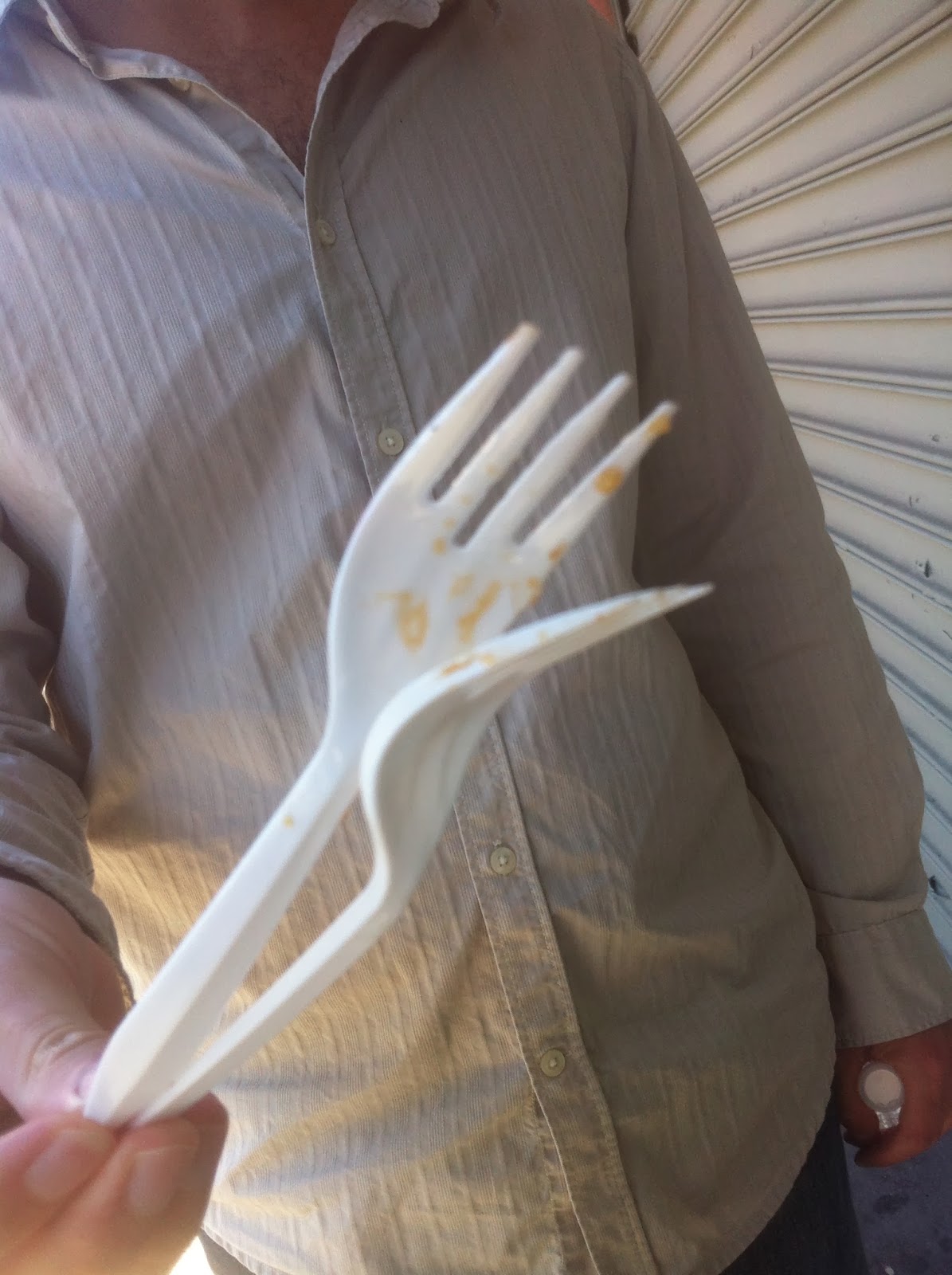
Begun as a candy shop and newsstand in 1954, Veselka (which means "rainbow") is one of the few remnants of what once was a thriving Ukrainian community in the East Village. Like Katz's and Joe's Shanghai and the White Horse and many other old New York favorites that have managed to survive, Veselka has made its way into the guide books, and instead of hearing Ukrainian spoken at the tables, you can hear French and Swedish and all the other languages of the folks who flock to New York. Despite the touristy crowd, the place is still authentic -- still run by the same family, still serving bigos (Ukrainian hunter's stew), stuffed cabbage, blintzes, borscht, and amazing varenyky -- Ukrainian dumplings, with your choice of filling: potato, cheese, meat, spinach and cheese, sauerkraut and mushroom, sweet potato, or arugula and goat cheese (okay, not all the fillings are so traditional). We chose potato, of course, and they were good. Really good. Two forks up good. With a little sour cream and applesauce, it was definitely my favorite dumpling of the day. But that might be my ancestors calling -- after all, my maternal grandparents were born in Kiev. Varenyky are in my blood. And also, as often as possible, my tummy.
Veselka's varenyky after

Two forks up!
Vanessa's on Eldridge Street
Some ambulation was required to work through the varenyky before ingesting further food, so we walked to our next stop: Vanessa's Dumpling House on Eldridge Street. Often cited as the best dumplings in NYC, we were excited to try them out. We picked chive and pork boiled dumplings, eight for two dollars, a price we thought was pretty hard to beat (just wait). Despite the amazing reputation, we were a little disappointed. The dumplings were very watery, maybe the fault of the boiling, but there wasn't much flavor. Although for that price, they were pretty darn good. In the end, however, we decided to only go with one fork up.


Vanessa's dumplings before
Although we didn't love them, we still somehow managed to clean our plate

But only one fork up for Vanessa

Prosperity just down the block
Just down the street from Vanessa, Prosperity is easy to overlook. It's just a storefront with a tiny two-oerson counter and an equally tiny menu. Soup, dumplings, pancakes...actually when you compare the size of the menu with the size of the place it's pretty impressive that they can turn out so many dishes with so little space. Bonus points for menu-variety-to-square-footage ratio. Additional bonus points for price -- one dollar (!) for an order of pork and chive dumplings. Yes, one dollar. And they were good. Delicious. Definitely two forks up.


No plate, no need...

The after shot

Two forks up for sure

Shanghai Cafe on Mott Street
We wanted to include a sampling of xiao long bao, otherwise known as soup dumplings. They're a family favorite, and we regularly visit Joe's Shanghai in both Flushing and Manhattan and even his Ginger incarnation and have never been disappointed. But we were curious -- was there a rival to Joe's awesomely delicious buns? Research revealed a strong contender: Shanghai Cafe on Mott Street. We headed over for our last stop and ordered the pork variety. We were pretty full by this time, but we persevered in the cause of a thorough mission. And I'm happy to report that the soup dumplings were excellent -- no better than Joe's but maybe (hard to say without a side-by-side comparison) just as good. My only complaint was the lighting -- a strange bright pink force field that turns everything alien, including the food. So Shanghai gets two chopsticks up for dumplings, no chopsticks up for ambience.


Weird pink lighting that turns the food radiant, but not in a good way

Irradiated soup dumplings
Two (or is it four?) chopsticks up!  

After ingesting all those dumplings (in the name of science!) we were just about crawling, or maybe rolling, home. But the mission continues, and there is no shortage of "best dumplings" to visit. What are yours?


Monday, November 11, 2013

Back to Jane. I should have stayed there.

I came across #43, A Jane Austen Education in the five dollar rack at my local bookstore. A fun hybrid of memoir and literary analysis, it's definitely only for Austen lovers. And memoir lovers. And since I count myself in both camps, it's perfect for moi. Deresiewicz is a former associate professor of English at Yale, a book critic, and the author of Jane Austen and the Romantic Poets, so he knows his Austen. The book is exactly what the subtitle says: How Six Novels Taught Me about Love, Friendship, and the Things That Really Matter. Each chapter is one novel and one lesson learned: Emma: Everyday Matters, Pride and Prejudice: Growing Up, Northanger Abbey: Learning to Learn, etc. It's charming and interesting, and filled with all sorts of new ways to look at Austen's novels.

Deresiewicz starts his story detesting Austen. He even quotes Mark Twain, a famous Jane-hater, who wrote, "It seems a great pity to me that they allowed her to die a natural death. Every time I read Pride and Prejudice I want to dig her up and hit her over the skull with her own shinbone." Makes you wonder why he read P&P more than one time!

He ends, of course, by loving her, and more than just loving her, he learns from Austen's novels how to be an adult, how to learn, and how to love. A thoroughly enjoyable read for the author's story and what he has to say about Austen's stories, it gave me a whole new perspective on those wonderful books. Maybe time to read another? But in the meantime...

...I read this piece of drek (#44). The first in yet another supernatural trilogy (what hath Rowling wrought?!?), this one features not just vampires, and not just vampires and witches, but vampires and witches and daemons (what's up with that annoying spelling?). It's not only overdone, and overlong (and I read all of it, don't ask me why), but it's -- worst of all -- boring. Since I didn't care, I didn't pay much attention, and it's ridiculously complicated, and I got confused, and I didn't care enough to go back and figure it all out, so I just kept plunging along, endlessly trapped in the dark. I have to learn how to put a book down in the middle and not pick it up again.