Where's the book?

Friday, May 29, 2015

Chalk and cheese: #17 and 18

I love that old British expression, "as different as chalk and cheese." Apparently, it goes all the way back to the 14th century, although no one knows exactly why chalk and cheese were chosen as the two items used to express comparative differences. One theory says that it's just because they are snappy, alliterative words. Another says it's because some cheese can look like chalk on the outside, and vice versa, but oh! what a surprise you would get if you tried to bite into chalk, or write with cheese.

In any event, the next two books on my list were quite the chalk and cheese. The first, #17, was a short, silly, fluffy little novel named Mrs. Queen Takes the Train by William Kuhn. It actually is about exactly what it sounds like: a bored, slightly addled Queen Elizabeth II wanders out of Buckingham Palace and takes the train to Scotland. She's feeling somewhat under attack, unappreciated, and nostalgic, so she decides to go visit a place that will remind her of happier times: the former royal yacht Brittania, now moored near Edinburgh. There are other characters, a slight romance, a friendship between palace servants, but the whole thing is so fluffy and undercooked that it literally leaves your brain as you are reading it, like disappearing ink of the mind. I read it just a couple of weeks ago, and I can't even tell you the name of a single character, other than Elizabeth. Duh. I don't mind a good mindless read, but this is so mindless you can't get much benefit from the escapism. It's like empty calories that don't even taste good. 

Book #18 was the chalk, or the cheese, whichever one would be more substantial and nourishing. Let's say cheese. Going Clear:  Scientology, Hollywood, and the Prison of Belief by Lawrence Wright (a Pulitzer Prize-winner) is one terrifying book. Scientology has always fascinated me, as well as exploring what is the difference between a religion and a cult -- and even whether or not all religions are cults at their core. But this book made the difference quite plain. Scientology is a cult. A scary, scary cult. Some of what the book reported is hard to believe, but Wright is a highly respected author, and everything he reports has been verified and re-verified. It left me feeling shocked and appalled. I am not surprised by people's willingness to forego skepticism, even to give over the reins of their own lives. I am more surprised what this organization has been able to get away with untouched by law for decades. Extortion, threats, kidnapping, bribery, physical and emotional torture...if Scientology were a foreign power they would be on the terrorist watch list. I vote we go the way of Greece and ban Scientology. 

Wednesday, May 13, 2015

A woman in her prime, and a woman who is not

#16 The Prime of Miss Jean Brodie by Muriel Spark

I read this book for the first time in my twenties, perhaps even while in college. But I remember it better than anything I read last year. Not so much because it's such a brilliant book (although it is) but because I had a memory then. Anything I heard or read in my first 30 years is lodged in the Velcro side of my brain, where things stick. Anything I heard or read in my last 15 years is housed in the Teflon portion of my brain, where things slide right out. The decade or so in between the Velcro Age and the Teflon Era is up for grabs.

Miss Brodie may have been in her prime, but clearly, I am not.

What did I remember from my first reading of The Prime of Miss Jean Brodie? I remembered the dramatic, charismatic Miss Brodie, and her girls, the "Brodie set," each of them famous for something: one for sex, one for her beauty, one for her temper, one for her tiny piggy eyes. I remembered the setting, Edinburgh in the early 1930s, and the two men Miss Brodie becomes involved with. But I didn't remember the book as being funny, which it is, and the amazing structure Spark builds, in which the future is revealed inside the present, and we know how things will unfold and where everyone will end up, but we don't know why.

Spark's precision of language is remarkable, and she manages to compress and reveal so much with so few words. She's like a surgeon, carving away all the fat and fluff, and leaving us with a powerful distillation of people, time, and place.

It's a wonderful read and also a great book to discuss. Book clubs everywhere, put this one on your list!

Tuesday, May 5, 2015

#10 and more

So little time lately, to read, or to write. Been very busy with theater- going and -reviewing and -writing on (such excellent linguistic skills!) and a million other things. So quickly, quickly, the last several, trying to catch up.

#10. Empty Mansions: The Mysterious Life of Huguette Clark and the Spending of a Great American Fortune by Bill Dedman and Paul Clark Newell Jr. I had read about Huguette Clark's life and the two books recently written about her in the paper and wanted to read more, wanted to understand how one of the richest women in the world ended up living the last twenty years of her life in a small hospital room, estranged from her family, when there was really nothing wrong with her. It's a fascinating story, and not just her own tale. Her father was one of the richest, if not the richest man in America, richer than Rockefellers and Carnegies. He was a U.S. Senator who had to resign in disgrace. And he's certainly the richest man that no one ever heard of. His story and Huguette's were both little known and incredibly interesting, and the book is well written by journalist Dedman, with a few remembrances from her cousin Newell, who has little to say except that he talked to her on the phone occasionally for several years. Six transit gloria, I guess. 

#11. Shirley by Charlotte Bronte. I think this was the only Bronte book I had never read, and now my work is complete. An incredibly long book, and not very interesting. It meanders around the story of wealthy Shirley and poor orphan Caroline Helstone and mill owner Robert Moore. Much of the focus is on the nascent Luddite movement, which is interesting, but lengthy and repetitive descriptions of the countryside and long diversions into storms, festivals, local dances, etc., make it a slog. I usually have no trouble with 19th century classics, even the lengthiest and most long-winded, but this one was a challenge. A challenge I am proud to say I met!

#12. The Lost Estate by Henri Alain-Fournier. The only novel by Alain-Fournier, who died in World War I, The Lost Estate tells the story of a captivating young man who stumbles about a wedding in a mysterious house, falls in love, and spends years trying to find the house and the girl again. It reads like fairy tale, filled with mystery and a sense of something vanishing just as it's reached. A wonderful look at the longing and confusion of adolescence, the book has the reputation of being the Catcher in the Rye of France.

#13. The Whites by Richard Price writing as Harry Brandt. Strange author attribution, no? Price started out thinking he was going to write a potboiler and didn't want to do it under his real name, so he invented Harry Brandt. But the book ended up being more of a typical Price novel than he expected, and he was outed anyway, so both names appear on the cover, which seems pretty strange. It tells the story of a group of former "wild geese" -- enthusiastic young cops, and "the whites" are the ones that got away, their own Moby Dicks. It's a twisty story with too many turns and too many characters for my taste. I continually had to look back to remember which white went with which goose, and what had happened to them all over the years. And while I was looking back and figuring out, my attention just wandered away. Lush Life a much better Price, imho.

#14. The Girl on the Train by Paula Hawkins. The reviews are right: it ain't no Gone Girl, despite how hard it's trying. I didn't gasp, I didn't startle. I did get bored. The narrator, a woman in her thirties who has lost everything--her husband, her job, her home--and spends most of her time riding the train and drinking, witnesses something out the window of said train that, she thinks, affects the investigation into a missing woman. But she is drunk or on her way there for most of the book, so the cops don't believe her, the husband of the missing woman doesn't believe her, and, frankly, I didn't care.

#15. All the Light We Cannot See by Anthony Doerr. Pulitzer Prize-winner, and deserving of it. A beautifully written story set in Germany and France during the second world way, Light is the story of a young German soldier and a blind French girl. There's also a diamond, much machinery (the boy is something of a mechanical genius), a miniature city, a museum, a Nazi officer in search of said diamond, French resistance members, and more. A hard-to-put-down tale. 

Yeah, all caught up!


Sunday, April 19, 2015

And many more

Good thing I decided on that book-a-week resolution last year. This year has been so much busier. I never could have managed it. I'm still going to stick to my fewer-but-bigger plan (War and Peace, really!) but I just haven't had the chance yet. Here's where I am so far, after those first two...

3. Can't We Talk About Something More Pleasant by Roz Chast
Wonderful, wonderful graphic memoir by the brilliant comic artist about her elderly parents ends. Sounds sad, and it is in parts, but it's also hilariously funny, especially if you know from old Jews in denial. I am exactly Chast''s age, and her parents had the same difficult attitude (and the same hoarding tendencies) as mine, and boy, did I relate. Love it, loved it!

4. Being Mortal by Atul Gawande
Brilliant writer and physician Gawande on the American approach to death, which is, as we all know, seriously screwed up. Should be read by everyone over a certain age.

5. The Signature of All Things by Elizabeth Gilbert
Had to get over my reluctance to read anything from the Eat, Pray, Love machine, but this was a wonderful, thick, juicy novel about an eighteenth-nineteenth century female botanist from Philadelphia. A really terrific read.

6. Dora Bruder by Patrick Modiano
Read for book group. By the Nobel Prize-winning French author. A slender, strange novel of a man's search for a girl he never knew. A Holocaust novel, a book about memory, about lives touching lives...interesting and unusual.

7. A bunch of plays, read for acting class: Doubt by John Patrick Shanley, 'Night Mother by Marsha Norman, The Children's Hour by Lillian Hellman, Other Desert Cities by Jon Robin Baitz, August: Osage County by Tracy Letts. All of them very moving. Have seen them all (Children's Hour only as a movie) except "Night Mother, which was the most devastating, a story of a woman who has decided that life is no longer worth living. The entire play is her last couple of hours, as she explains her decision to her mother, and they argue about the value of her life. 

8. Home by Marilynne Robinson. Home takes place at the same time as Gilead, which I had read a couple of years ago, but in a different household. It tells the story of a wayward son's return home. I love Robinson's simple, poetic language. Her books are almost hypnotic. And beautiful.

9. Lila by Marilynne Robinson. The third of the Gilead (the name of the town) novels, this one is about the woman married to the main character in Gilead, a strange woman who in the prior book we learn little about. Also beautiful.

More to come...still playing catch-up...

Wednesday, March 11, 2015

Really good, really easy pan pizza

This one is for D & E, since I know they like to make pizza at home. It's ridiculously easy. No need to knead. No stretching and pulling. No special equipment, other than a cast iron skillet (which everyone should own anyway). The recipe makes two pan pizzas. You can put the dough in the fridge for a couple of days to wait until you're ready for it, and even freeze the dough and the sauce. Both are delicious and very adaptable to both your schedule and desire for creativity. And it's delicious, promise.


Foolproof Pan Pizza
Adapted from Serious Eats
Makes 2 10-inch pies, each of which serves 4-6

Ingredients
2 1/2 cups flour, plus more for sprinkling
2 teaspoons kosher salt, plus more for sprinkling
1/2 teaspoon instant yeast
1 cup plus 3 tablespoons lukewarm water (see note)
2 teaspoons extra-virgin olive oil, plus more for greasing pans
1 1/2 cups pizza sauce (recipe below)
12 ounces grated full-fat mozzarella cheese (not fancy fresh mooz, just the regular old Polly-o kind
Toppings you like
Fresh basil leaves (optional)
2 ounces grated parmesan or Romano (optional, but good)

Directions

  1. Combine flour, salt, yeast, water, and oil in a large bowl. Mix with hands or a wooden spoon (hands are easier) until no dry flour remains. 
  2. Cover the bowl tightly with plastic wrap, then let rest on the countertop for at least 8 hours and up to 24. The dough should rise dramatically, to 3-4 or more times its original size.
  3. Sprinkle the top of the dough lightly with flour and transfer to a well-floured work surface. Divide the dough into two pieces and form each into a ball by holding it with well-floured hands and tucking the dough underneath itself, rotating it until it forms a tight, smooth ball.
  4. Pour 1-2 tablespoons of oil in the bottom of two 10-inch cast iron skillets or round cake pans (or just one, and save one dough ball for later--it will keep 3 days in the fridge, wrapped well in plastic wrap, or for a few months in the freezer). Place 1 ball of dough in each pan and turn to coat evenly with oil. Use your palm to press the dough around the pan, flattening it slightly and spreading the oil to the edges. Cover tightly with plastic wrap and let sit at room temperature for 2 hours. After the first hour, adjust an oven rack to the middle position and preheat the oven to 550 degrees.
  5. After two hours, the dough should mostly fill the pan to the edges. Use your fingertips to press it around until it fills in every corner, popping any large bubbles. Lift up edges to let air bubbles underneath escape. 
  6. Top each crust with 3/4 cup sauce, spreading with the back of a spoon. Top with mozzarella cheese, season with salt, add any other toppings you like, drizzle with a little olive oil and scatter with basic if using.
  7. Transfer to oven and bake until the top is golden brown and bubbly and the bottle in golden and crisp when you peek. If the bottom is not as crisp as you'd like, place the pan on a burner and cook on medium heat, moving the pan around to cook evenly until crisp, 1-3 minutes. Remove the pizzas and transfer to a cutting board. Slice and serve.
Note: How to tell if the water is the right temperature? Too hot and it kills the yeast. Too cold and it rises too slowly (although that's not much of a problem with this recipe, since it has such a long rise). The perfect temp is between 95 and 110, in other words, roughly the temperature of the human body -- 98.6. The easiest way to make sure your water is that temperature is to let it flow over the inside of your wrist, the most sensitive part of your body (that's why moms in the old movies shake the milk bottle over their wrist to check if it's too hot). If it feels cool as it flows, it's probably too cold. If it feels hot, it's most likely too hot. But if it feels pretty much like nothing because it's the same temperature as you are, then, Goldilocks, it's just right. Remember that cold measuring cups and bowls will chill the water slightly, so err on the warmer side if you err at all. That's a tip I learned in Home Economics in 7th grade, which was perhaps the most useful class I ever took in 13 years of public education. Geometry? Still don't understand it. But I can sew on a button and measure flour accurately, skills I use all the time. 


New York Style Pizza Sauce
Makes enough for 2-4 12-inch pies

Ingredients
1 28-ounce can whole peeled tomatoes
1 tablespoon extra-virgin olive oil
1 tablespoon unsalted butter
2 medium cloves garlic, crushed
1 teaspoon dried oregano (I use a bit more--I like the oregano-y flavor)
Pinch red pepper flakes
Kosher salt
2 6-inch sprigs fresh basil with leaves attached (I haven't done this yet but will once summer and my herb garden arrive)
1 medium yellow onion, peeled and halved
1 teaspoon sugar

Directions
  1. Process tomatoes and their juice in food processor until pureed. Doesn't need to be completely smooth, but not too chunky.
  2. Combine butter and oil in medium saucepan and heat over medium-low heat until butter is melted. Add garlic, oregano, pepper flakes, and a large pinch of salt and cook, stirring frequently, until fragrant but not browned, about 3 minutes. Add tomatoes, basil, onion, and sugar. Simmer very slowly (bubbles barely breaking the surface), stirring occasionally, until reduced by half, about one hour. Season with salt, allow to cool, and store in covered container in the fridge for up to 2 weeks, or freeze.


Thursday, January 15, 2015

Book #2: Euphoria

I started off the year with a bang (The Paying Guests) and now here's a whimper.

Euphoria, by Lily King, was on a lot of 2014 best-of lists. But I'm not sure why.

Loosely based on the early life of anthropologist Margaret Mead, the book takes place in New Guinea in the 1930s. The woman at the center of the story, Nell, has already made a name for herself in, and outside of, her field. Her husband Fen is jealous and competitive. And Andrew, the fellow anthropologist they meet up with, is so lonely, lost, and depressed that he is, when the story begins, suicidal. He is rejuvenated by his connection with Nell and Fen, and Nell responds to him as he reinforces her passion for her work.

The jungle setting is not one that every interests me. Although there are near constant references to the bugs and heat, King didn't really convey the setting, and although there were certain interesting details, I didn't feel myself there, in the place, with these people. The people themselves were nearly as thinly portrayed. Nell herself, the woman at the center of the story, is not terribly well-drawn, Andrew slightly better, and Fen is little more than a stock character -- the angry, jealous husband. He is so Snidely Whiplash-despicable that it's hard to give Nell the credit she deserves, since she chose this buffoon as her mate.

I appreciated the way King wove the many strands and voices -- Andrew's first-person account, Nell's diary, an omniscient third-person narrator. And the exploration of the science of anthropology itself was interesting -- King makes the case that the work reveals more about the anthropologist than the people studied. But it's hard to recommend a book when the most positive thing you can say about it is that it's relatively short and reads quickly. But there it is -- it's relatively short and goes by in a breeze. Enough?


Wednesday, January 7, 2015

Starting off the new year with a bang (and a resolution)

I resolved in 2014 to read a book a week, 52 books in total for the year. And I did it, with one book to spare: 53 books in all. Some were quick reads (any of Liane Moriarty's) and some took a while (any of Trollope's, particularly The Way We Live Now). But given my pace, I was a bit hesitant to go in for the really deep dives. So this year my resolution is somewhat different: instead of going wide, I'm going long.

I resolve to read those big, heavy, hard-to-hold-in-your-lap books that I've put off reading (or in one case, re-reading). In 2015 I will read War and Peace (doesn't everyone say that? but I mean it!) and The Power Broker and several more big Victorians (there are many of Dickens and Trollope that I've never cracked) and George Elliot's Daniel Deronda. And I will re-read A Suitable Boy, because it's been a long time and I loved it so much.

Onward! And read-ward!

Herewith the first book of 2015. And it was a good one:

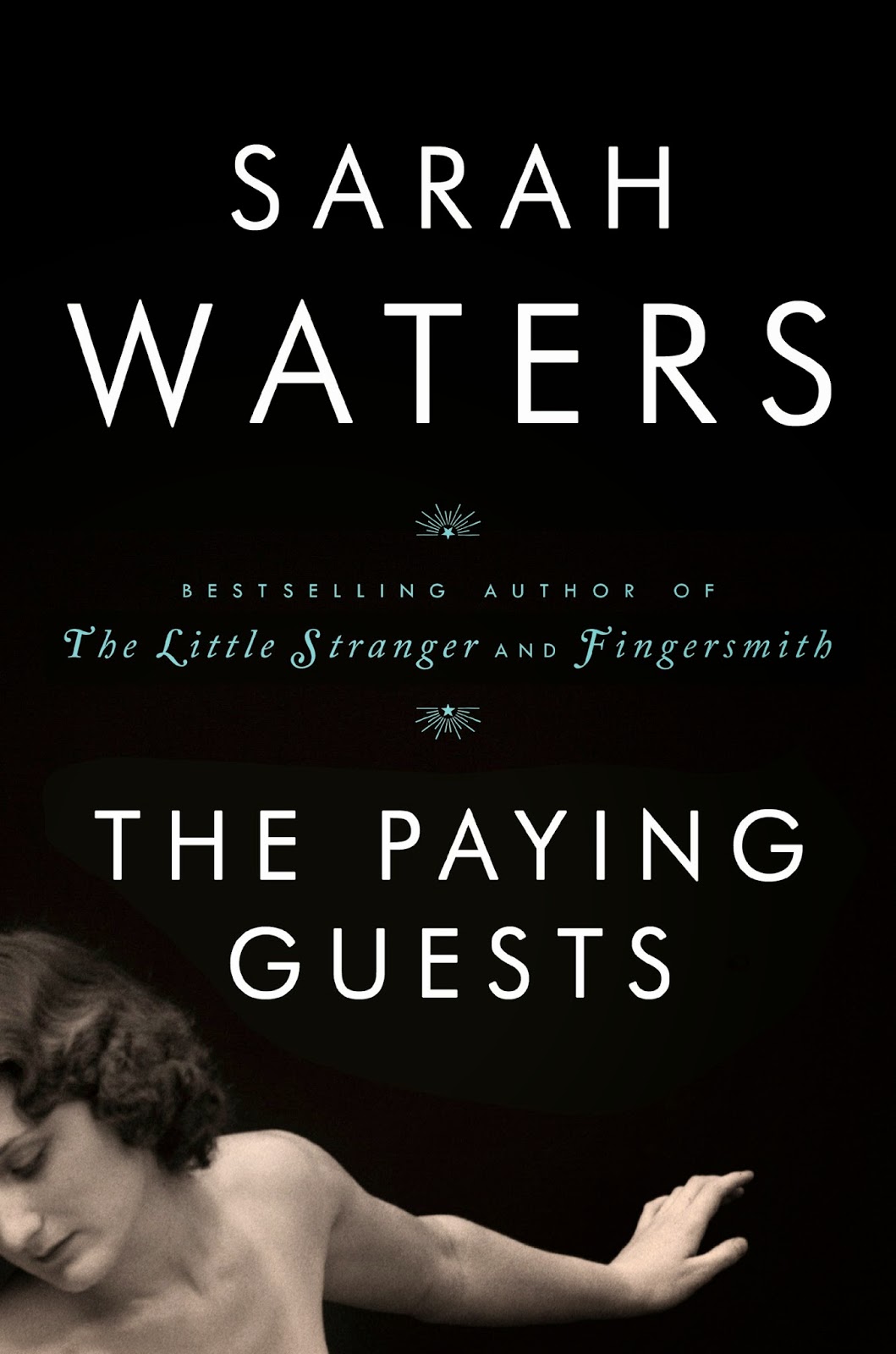
#1 The Paying Guests by Sarah Waters
Absolutely brilliant. I completely agree with all the critics who put it on the Best Books of 2014 lists. Set in London in 1922, it's total immersion in post-WWI England. 26-year-old Frances Wray and her widowed mother have lost nearly everything in the war -- Frances's father, her two brothers, and almost all their money. All they have is their home, into which they are forced to welcome lodgers -- the paying guests of the title -- a young, lower-class married couple. Dozens and dozens of pages go by with very little happening, but it doesn't matter in the least. Frances scrubs the floors, makes lunch, her mother reads the parish newsletter, they go to the cinema to see the latest American crime thriller. The detail is anything but dull -- you are completely absorbed into this world. And unlike so many writers of period novels, Waters isn't showing off how much research she did -- she's pulling you so far in that you start to feel like you've time traveled to another era.

But just when you're wondering where it's all going, it goes places with a bang. A forbidden love story, lust, sex, murder, an investigation, an accusation...so much happens and it's all absolutely gripping. Alfred Hitchcock would have loved to make this book into a movie -- it reminded me very much of the quiet tension and particularly British Rebecca or Dial M For Murder. 
darkness of

Nearly 600 pages in three days -- that's an un-put-downable book. What a great way to start the year.


Monday, January 5, 2015

All the books I read in 2014

Here's the list, in chronological order, starting back in January:

  1. The Quiet American by Graham Greene
  2. Someone by Alice McDermott *
  3. Fun Home by Alison Bechdel *
  4. The Boy Who Went Away by Eli Gottlieb
  5. The Execution of Noa P. Singleton by Elizabeth Silver
  6. Uncle Tom’s Cabin by Harriet Beecher Store
  7. The Sheltering Sky by Paul Bowles *
  8. Little Failure by Gary Schteyngart *
  9. Straight Man by Richard Russo
  10. The Reef by Edith Wharton
  11. Franny and Zooey by J.D. Salinger *
  12. Life After Life by Kate Atkinson *
  13. Nine Stories by J.D. Salinger *
  14. Citizens of London by Lynne OIson
  15. Dr. Wortle’s School by Anthony Trollope
  16. Zoli by Column McCann
  17. The Woman Upstairs by Claire Messud *
  18. Longbourn by Jo Baker *
  19. In Cold Blood by Truman Capote *
  20. Time and Again by Jack Finney
  21. Case Histories by Kate Atkinson
  22. The Book of Salt by Monica Truong
  23. How to Be Good by Nick Hornby
  24. Whose Body? By Dorothy Sayers *
  25. Lady Susan by Jane Austen
  26. Crossing to Safety by Wallace Stegner *
  27. Truth and Beauty by Ann Patchett
  28. Rebecca by Daphne du Maurier *
  29. The Way We Live Now by Anthony Trollope
  30. Roman Fever and Other Stories by Edith Wharton (also Omicidio alla Moda)
  31. A Guilty Thing Surprised by Ruth Rendell
  32. Hotel on the Corner of Bitter and Sweet by Jamie Ford
  33. ½ of The Luminaries by Elinor Catton
  34. The Emperor’s Children by Clair Messud
  35. The Uncoupling by Meg Wolitzer
  36. Bartleby the Scrivener * and Benito Cerino by Herman Melville
  37. When Will There Be Good News by Kate Atkinson
  38. What Maisie Knew by Henry James
  39. What Alice Forgot by Liane Moriarty
  40. Big Little Lies by Liane Moriarty
  41. Colorless Tsukuru Tasaki and His Years of Pilgrimage by Haruka Murakami *
  42. The Hypnotist’s Love Story by Liane Moriarty
  43. Behind the Scenes at the Museum by Kate Atkinson
  44. We Are Not Ourselves by Matthew Thomas *
  45. The Steppe and The Duel* by Anton Chekhov
  46. Station Eleven by Emily St. John Mandel *
  47. Raise High the Roof Beam, Carpenters * and Seymour an Introduction by J.D. Salinger
  48. My Brilliant Friend by Elana Ferrante
  49. The Blue Flower by Penelope Fitzgerald
  50. The Last Anniversary by Liane Moriarty
  51. The Catcher in the Rye by J.D. Salinger
  52. Three Wishes by Liane Moriarty
  53. Offcomer by Jo Baker
The ones with asterisks are those I particularly liked. My favorites? We Are Not Ourselves, Station Eleven, In Cold Blood, and Crossing to Safety. Two old, two new. How tidy. All quite different -- a post-apocolypic adventure, a rich family saga, a non-fiction crime novel, and a powerful story of friendship and marriage. But all have compelling characters, fascinating narratives, and beautiful, moving language. It was a good year. Onward!


Monday, December 29, 2014

Did it!

I said that I would do it and indeed I did. 

Says Henry Higgens and me.

Of course, he created a lady. I just read 52 books. Plus one extra for good measure. And there are still two days left. Who knows what I can do if I hurry (and do nothing else for 48 hours).

#52 Three Wishes, by Liane Moriarty

Another accomplishment this year -- I've read the complete oeuvre of Liane Moriarty, Australia's hot chick lit author. It's good chick lit (she protests), well written, often insightful, with interesting characters and compelling narratives that keep you turning pages. Her more recent books are much better than her earlier ones; you can actually see her learning from book to book. This is one of the earlier books, so it feels thinner than the later ones like Big Little Lies and The Husband's Secret (still my favorite). It's the story of three sisters, triplets in fact, who are celebrating their 33rd birthday against a rather tumultuous background. They fight, they suffer, they make up, they meet men, they lose men... the usual stuff. It's good entertainment, but not nearly as good as her later novels.


#53 Offcomer, by Jo Baker
I picked this up because I liked her latest, Longbourn, so much. This book was published here because of Longbourn's success, and it doesn't do Baker's reputation any good.
   
Offcomer is Baker's first novel, and it is also the Lancashire dialect's word for "newcomer." It's a slim story of a young woman who is lost in the world, caught in a sad, empty relationship with a pompous academic, nearly friendless, living in a strange city, working a dead-end job. To say that Claire suffers from low self-esteem would be putting it mildly. She cuts herself, bites her lips, pulls at her cuticles until they bleed, describes herself as ugly...she is so unkind to herself you want to call the cops to come take her away for cruelty.
 
The back-cover blurb says that it's set against the "backdrop of The Troubles in Northern Ireland." But there is literally not one mention of those Troubles. It also says she is "stunned by the recent emergence of secrets from her mother's past." The secrets are fairly lame, and in fact I had a hard time seeing why they were of any importance at all. It also says the book is "an honest and affecting work of real and quiet power." No way. It's rather dull and very depressing. There's a sense of repetition that becomes drone-like: "Claire knew she was a freak. She'd been born and grown up and lived her life so far without a skin. There didn't seem to be a line where she stopped and everything else began. Her surface was smudged and pulpy, too permeable." We get it. We get it.
 
Or check this out for unvarying sentence structure: "She heaved herself up off the bed, bent down again, slid her hand under a heap of clothes and crushed them up against her chest. She walked stiffly over to the chest of drawers. She opened each drawer in turn, then closed each of them again. Every one of them was full. Slowly, she turned to the wardrobe...She looked back across the room at the dark open mouth of her rucksack...She pushed the rucksack back into the corner. She picked up her mug..." I think I missed something because I was lulled to sleep.
 
Repetition can sometimes be powerful, it can build, it can ratchet up tension and emotion. In this case it's more like endless reportage. She did this, she did that, she did that again. Someone wake me up, please.
 
The book, like Claire, starts to seem trite. It feels like the same growing up all of us do, the same insecurities we conquer, the same low self worth we battle. Nothing pulls it out of the ordinary or makes it worth reading. Thank goodness Baker's talents grew.



Monday, December 22, 2014

The next-to-the-last-one four

I think I might actually make it. 52 books in 52 weeks. I’m on the last one now, and it’s a quickie (you’ll see why shortly). I might even get a head start on 2015, although I don’t think I’ll be trying for a book a week again (more about that later). In the meantime, before the grand finale, here’s a quick rundown of the latest:


#48 My Brilliant Friend, by Elana Ferrante
There’s been a lot of fuss about this book, the first in Ferrante’s Neopolitan trilogy. Critics love the books, which all came out in the US in the last couple of years. Part of the fascination is Ferrante’s anonymity. She uses a pen name, doesn’t give interviews, doesn’t promote her books. There is even some speculation that she’s not a she. The press just eats that up. But the book itself, for me, was not especially gripping. I found the stories of growing up in Naples in the 1950s – still  desperate postwar years in southern Italy – very interesting. But her writing style feels monochromatic, rhythmically bland, and the cast of characters is vast, too vast for me to connect with. She doesn’t give as much flavor or texture to her characters as she does to their living situations, and since I primarily read for interesting character, I found myself not caring a great deal about what happened. I don’t think I will read the second two books in the trilogy, but we’ll see. It’s hard to let go of the story of these two women’s lives when it’s ended so early. I might need to see how things turn out.


#49 The Blue Flower, by Penelope Fitzgerald
Speaking of fuss, Penelope Fitzgerald, an author I never heard of until the last month, has been everywhere lately, even though she died in 2000. In fact, if you type the letters “p-e-n” into Google, she’s the first thing to come up – she's even ahead of Penelope Cruz! That’s some level of fame. It’s mostly due to the new autobiography by Hermione Lee that came out a couple of months ago and received all sorts of plaudits. But there also seems to be a resurgence of respect for an author who didn’t publish her first book until she was nearly 60 and then wrote one acclaimed book after another until she died at the age of 83. The Blue Flower is the fictionalized story of the poet Novalis, set in eighteenth-century Germany, and his love for Sophie, a twelve-year-old girl. He not only adores a child, she's a particularly dull, unattractive little girl. I didn’t find the delight in the story that so many readers and critics have; for me, it was as dull and unappealing as Sophie herself. I don’t think I’ll be visiting more of Ms. Fitzgerald’s work.


#50 The Last Anniversary, by Liane Moriarty
I guess that in addition to vowing to read a book a week, I should have also vowed to read the entire oeuvre of Australia’s Moriarty. Her books are perfect palate-cleansers after something more twisty and dense. This one centers on a long-ago mystery (a particularly easy one to unravel -- if I can solve it, you know it's easy) on a small island off of Sydney, and the family living there. It’s not as much fun as some of her others, but perfectly pleasant, like a nice light salad in between more elaborate feasts. 


#51 The Catcher in the Rye, by J.D. Salinger
Apparently another vow I made this year, unbeknownst to myself, was to re-read the complete works of J.D. Salinger. It was a bit of a rollercoaster ride. Loved some (Franny and Zooey!), liked a few, not crazy about some, bored to tears by one (Seymour, an Introduction). Catcher in the Rye generated a middling response. I can certainly see why it was a groundbreaking novel. And I can also see why I loved it so when I first read it in high school. I remember feeling that Holden spoke for me – all that angst, all that anger, all that disaffection. But reading it again fortysomething years later generates a different reaction. Salinger brilliantly captures the tortured mind of an intelligent adolescent. But it’s so damn hard to hang out in the mind of that adolescent, who is, in addition to being intelligent, insufferable. Holden is me at 16. And maybe I just found out that, at 16, I was a prick.